
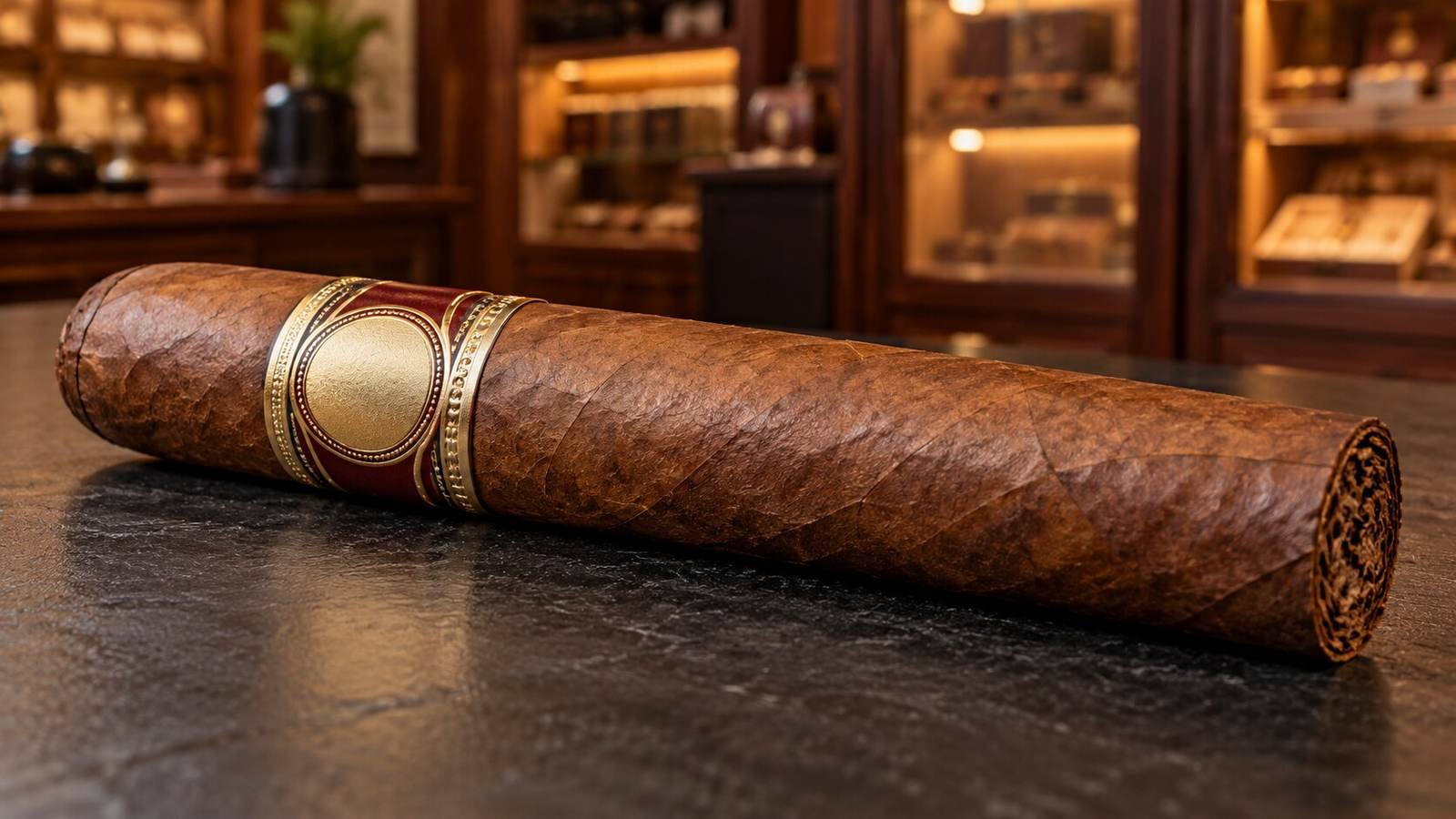
Every premium cigar is built from three kinds of tobacco leaf — filler, binder and wrapper — and has a head you cut and a foot you light. Know those five words and you can follow almost any conversation about cigars.
The outside of a cigar
| Part | What it is |
|---|---|
| Head | The closed end that goes in your mouth. This is the end you cut. |
| Cap | A small round piece of wrapper leaf glued over the head to seal it. You cut off part of the cap, never all of it. |
| Shoulder | Where the rounded head meets the straight body. Cut above this line, or the wrapper can start to unravel. |
| Body | The main length of the cigar. |
| Band | The paper ring that shows the brand. Leave it on until the cigar warms up and the glue loosens. |
| Foot | The open end you light. |
The three layers of tobacco
Wrapper
The outermost leaf, and the most expensive one in the cigar. It has to be thin, flexible, even in color and free of tears, so it is grown with special care. Despite being a small part of the cigar by weight, it contributes a large share of the flavor and all of the first impression. Our lesson on cigar wrapper colors goes into more detail.
Binder
A tougher leaf wrapped around the filler to hold it together. You never see it, but it keeps the cigar's shape and helps it burn evenly.
Filler
The heart of the cigar: several leaves, often from different farms or countries, folded together lengthwise. The blend of filler leaves is where most of a cigar's strength and character comes from. Leaves from the top of the plant (called ligero) get the most sun and are the strongest; leaves from the middle (seco) add flavor and aroma; leaves from the bottom (volado) are mild and help the cigar burn.
Long filler vs short filler
Long filler cigars use whole leaves that run the full length of the cigar. They are rolled by hand, burn slowly and evenly, and hold a firm ash. Nearly every premium cigar is long filler.
Short filler (sometimes called mixed filler) uses chopped pieces of leaf, often machine-made. These cigars are cheaper but burn hotter and faster and can taste harsher. When you are learning, stick to long filler so you get a fair idea of what cigars really taste like.
Quick check: gently squeeze a cigar along its length. It should feel evenly firm, like a ripe peach, with no hard knots or soft empty spots. Those can make a cigar draw poorly or burn unevenly.
Keep learning
-
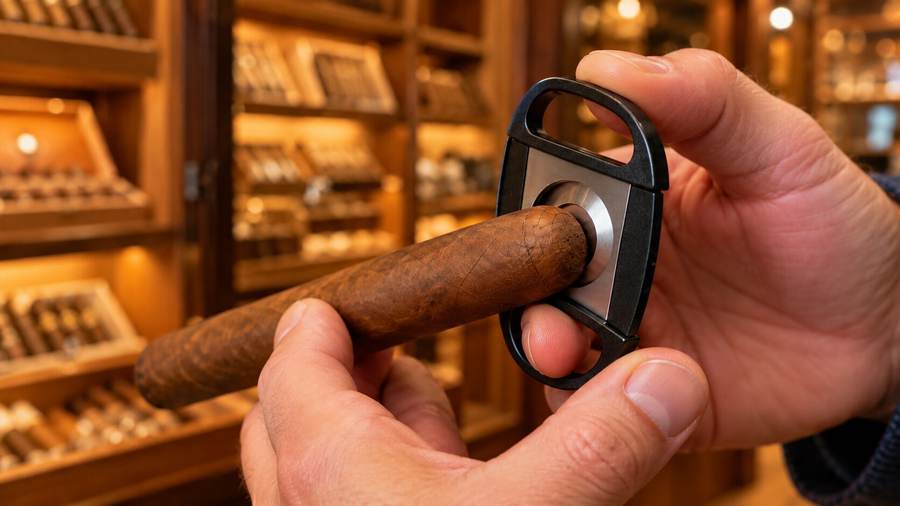 How to Cut a Cigar
Where to cut a cigar, how much to take off, and when to use a guillotine, punch or V-cutter. Step by step for beginners.
Read lesson
How to Cut a Cigar
Where to cut a cigar, how much to take off, and when to use a guillotine, punch or V-cutter. Step by step for beginners.
Read lesson
-
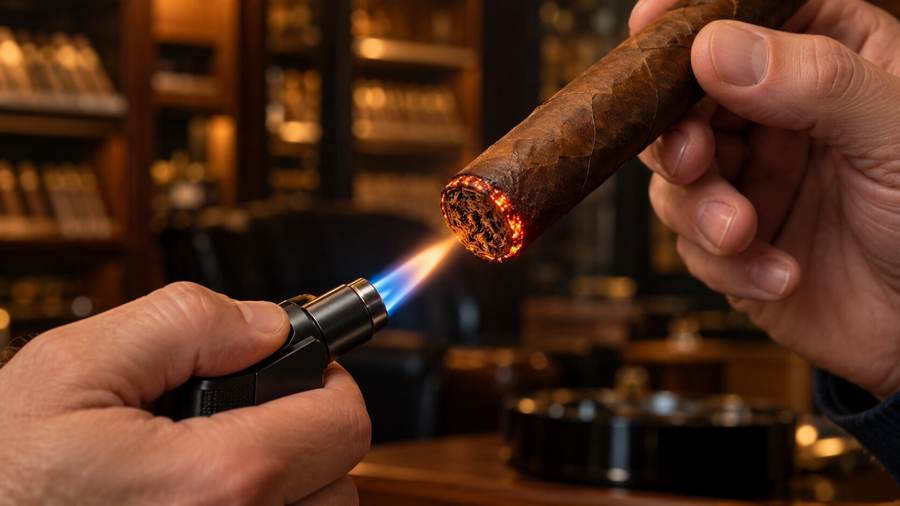 How to Light a Cigar
Toast the foot, then light with a gentle draw. What to use, what to avoid, and how to fix an uneven burn or relight.
Read lesson
How to Light a Cigar
Toast the foot, then light with a gentle draw. What to use, what to avoid, and how to fix an uneven burn or relight.
Read lesson
-
 How to Smoke a Cigar
Don't inhale, puff about once a minute, and let the ash build. How to smoke and taste your first cigar, step by step.
Read lesson
How to Smoke a Cigar
Don't inhale, puff about once a minute, and let the ash build. How to smoke and taste your first cigar, step by step.
Read lesson