How to Cut a Cigar the Right Way
Cutting a cigar correctly is a small but essential part of the smoking ritual. A clean cut opens the cigar’s head without damaging the wrapper, helping create a smooth draw and preventing loose tobacco from reaching your mouth. With the right tool, careful placement, and a confident motion, even a beginner can prepare a cigar neatly.
Choosing the Best Cutter for a Clean Cigar Cut
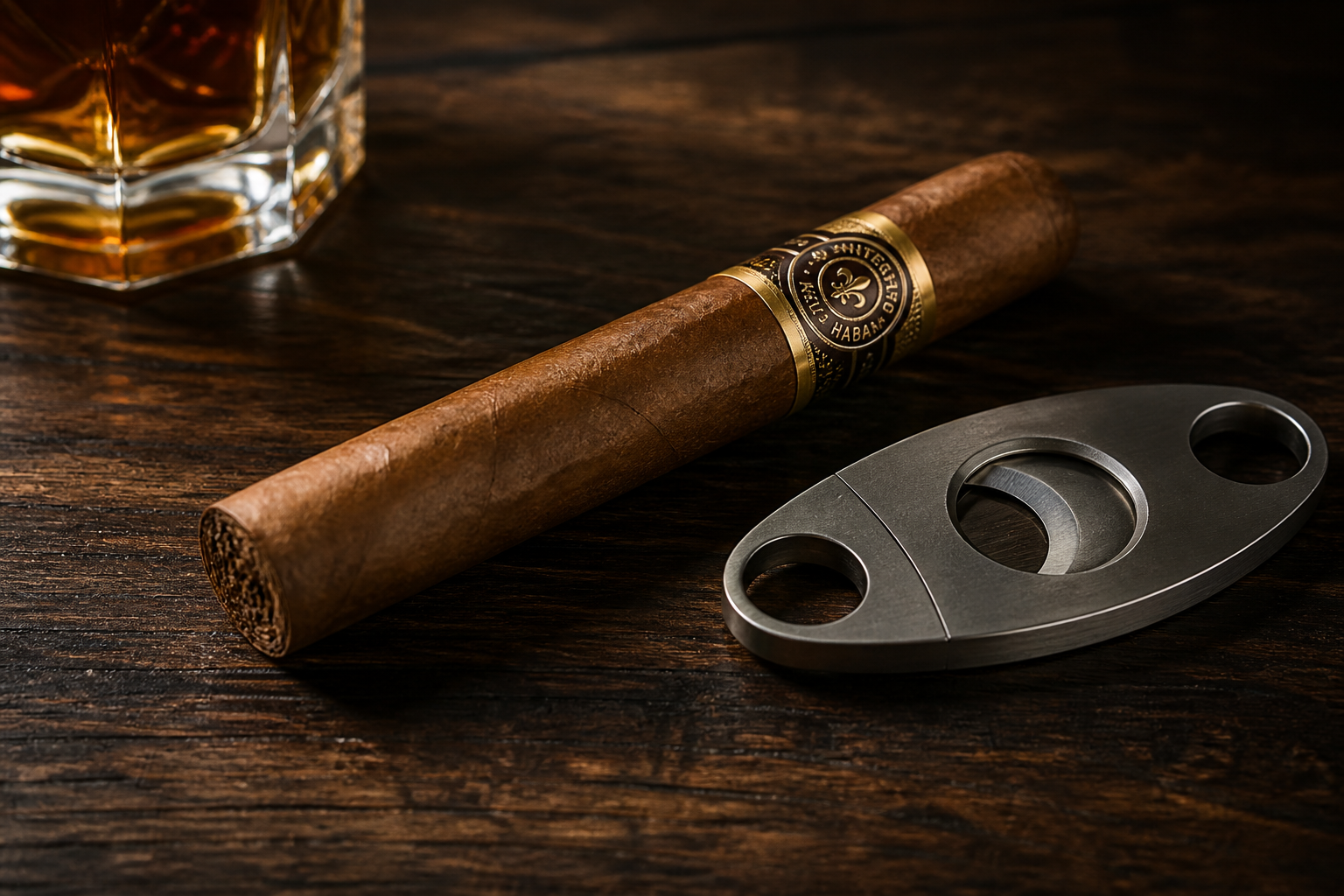
A sharp double-blade guillotine cutter is the most versatile choice for most cigars. Its blades close from both sides, producing an even cut with less risk of compressing or tearing the wrapper. Choose a cutter that feels solid in your hand and has an opening large enough to accommodate the cigar’s ring gauge.
Other options include single-blade guillotines, punch cutters, and V-cutters. A punch removes a small circular section from the cap, while a V-cutter creates a wedge-shaped opening that can provide a concentrated draw. Each style has its advantages, but sharpness and build quality matter more than appearance or price.
Finding the Cap Before You Make the First Cut
The cap is the small piece of tobacco attached to the head of the cigar—the end that goes in your mouth. It holds the wrapper leaf in place and usually appears as one or more faint circular lines around the cigar. Rotating the cigar under good lighting can make these seams easier to see.
Your goal is to remove only the upper portion of the cap while leaving its base intact. Cutting below the cap line may cause the wrapper to unravel as you smoke. If the line is difficult to identify, make a conservative cut near the rounded tip; you can always remove a little more afterward.
Positioning the Blades at the Proper Cutting Line
Place the cigar’s head inside the cutter and align the blades just above the lowest visible cap line. For most traditionally shaped cigars, removing about 1/16 to 1/8 inch is enough to expose the filler tobacco and create an open draw. Avoid taking off a large section in one attempt.
Keep the cigar level and centered between the blades so the cut remains straight. Some smokers place the cutter flat on a table, insert the cigar until its head touches the surface, and then close the blades. This technique can help beginners make a shallow, controlled cut.
An Easier Way to Get the Right Cutting Depth
If you want to take some of the guesswork out of positioning your cigar, the Mike’s Cigars Double-Blade Cutter features a built-in topper that helps guide the cigar to a consistent cutting depth. Simply insert the head of the cigar until it rests against the topper, then make your cut.
This small but useful feature makes it easier to avoid cutting too far down the cap, while the double blades provide a clean, even cut from both sides. It’s especially helpful for beginners who are still learning exactly where to position the cigar before cutting.
Making One Quick, Firm Cut Without Crushing It
Once the cigar is positioned, steady it gently without squeezing the body. Close the cutter in one quick, confident motion. A decisive cut allows the blades to slice through the tobacco cleanly, whereas slow or hesitant pressure can pinch the cigar and tear its delicate wrapper.
Do not twist the cutter or cigar while cutting. If the blades resist, they may be dull, dirty, or unsuitable for the cigar’s size. Forcing a poor-quality cutter through the cap can crush the head, so it is better to stop and use a sharper, properly sized tool.
Inspecting the Draw and Fixing an Uneven Cut
After cutting, examine the head for loose tobacco, cracks, or an uneven edge. Place the unlit cigar in your mouth and take a gentle test draw. The airflow should offer mild resistance, similar to sipping through a straw, rather than feeling completely blocked or unusually open.
If the draw is too tight, trim a very thin additional slice from the head. For a slightly uneven cut, remove only the raised portion instead of cutting deeply across the entire cigar. Loose tobacco can be brushed away carefully, but avoid picking at the filler or wrapper, as that may make the damage worse.
Cleaning and Storing Your Cutter After Each Use
Small pieces of tobacco and natural oils can collect on the blades, eventually making them sticky or less effective. After each use, wipe the cutter with a soft, dry cloth. For heavier residue, use a cotton swab lightly dampened with isopropyl alcohol, then dry the cutter completely before closing or storing it.
Keep the cutter in a dry case or pouch where its blades will not be damaged by keys, coins, or other metal objects. Do not leave it in a humid cigar box unless the manufacturer specifically recommends doing so. Regular cleaning and protected storage will help it stay sharp and deliver consistent cuts.
A proper cigar cut depends on three things: a sharp cutter, accurate placement, and one firm motion. By preserving the base of the cap and checking the draw before lighting, you can avoid common problems such as unraveling wrappers and restricted airflow. Take your time with the setup, make the cut confidently, and care for your cutter so it remains ready for the next cigar.